clay bodies, displaced soils
Hamburgo, Alemania | 2025
Hallo: Festspiele 2025, PARKS.
Fotos por Ali Haji.
clay bodies, displaced soils parte de la historia material de PARKS y de las transformaciones de su suelo; sitio de un antiguo humedal y frente al cual se encontraba la Müllverbrennungsanlage Bullerdeich, la primera planta incineradora de residuos puesta en funcionamiento en Alemania y en Europa continental. Los residuos y partículas emitidos durante la incineración caían y se acumulaban en los terrenos circundantes; parte de los residuos generados por este proceso también volvía a entrar en circulación como materia constructiva, utilizándose, entre otros usos, para producir morteros empleados en edificios de la zona.
El proyecto atiende a estas relaciones entre suelo, residuo y arquitectura: a cómo una materia es extraída, desplazada, quemada, depositada y reincorporada al entorno construido. Lo que parece desaparecer reaparece bajo otra forma y lo que pertenece al suelo puede terminar formando parte de un muro, una junta o una cubierta.
Al no poder trabajar directamente con la tierra de PARKS, recurrimos a arcilla comercial: una tierra procedente de otro lugar, separada de su contexto geológico y convertida, mediante procesos de extracción, refinamiento y distribución, en una materia estandarizada capaz de circular. El proyecto trabaja desde esta distancia: desde la imposibilidad de acceder al suelo que pisamos y desde la presencia de otra tierra que ha llegado hasta allí a través de circuitos industriales y comerciales.
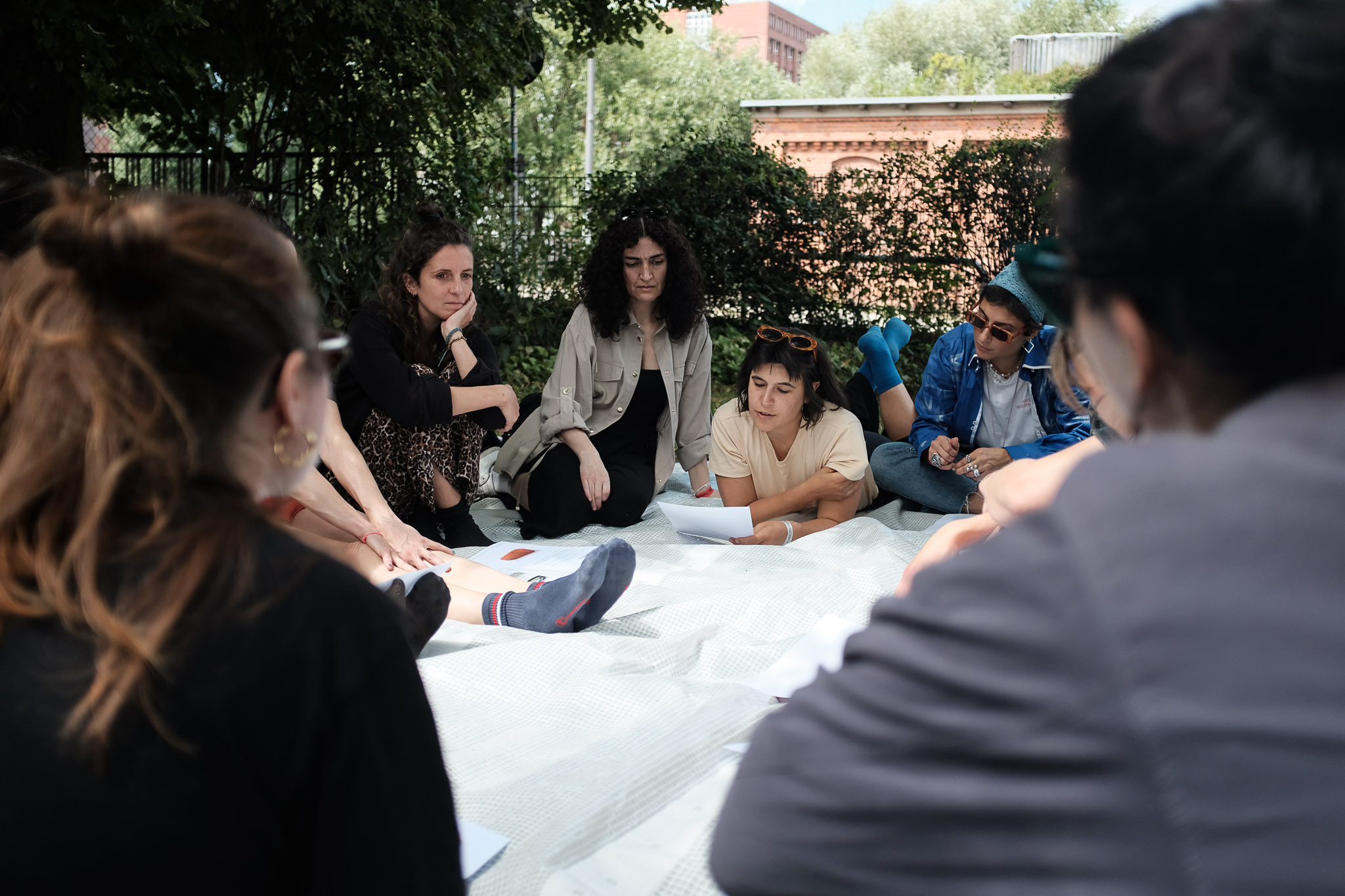
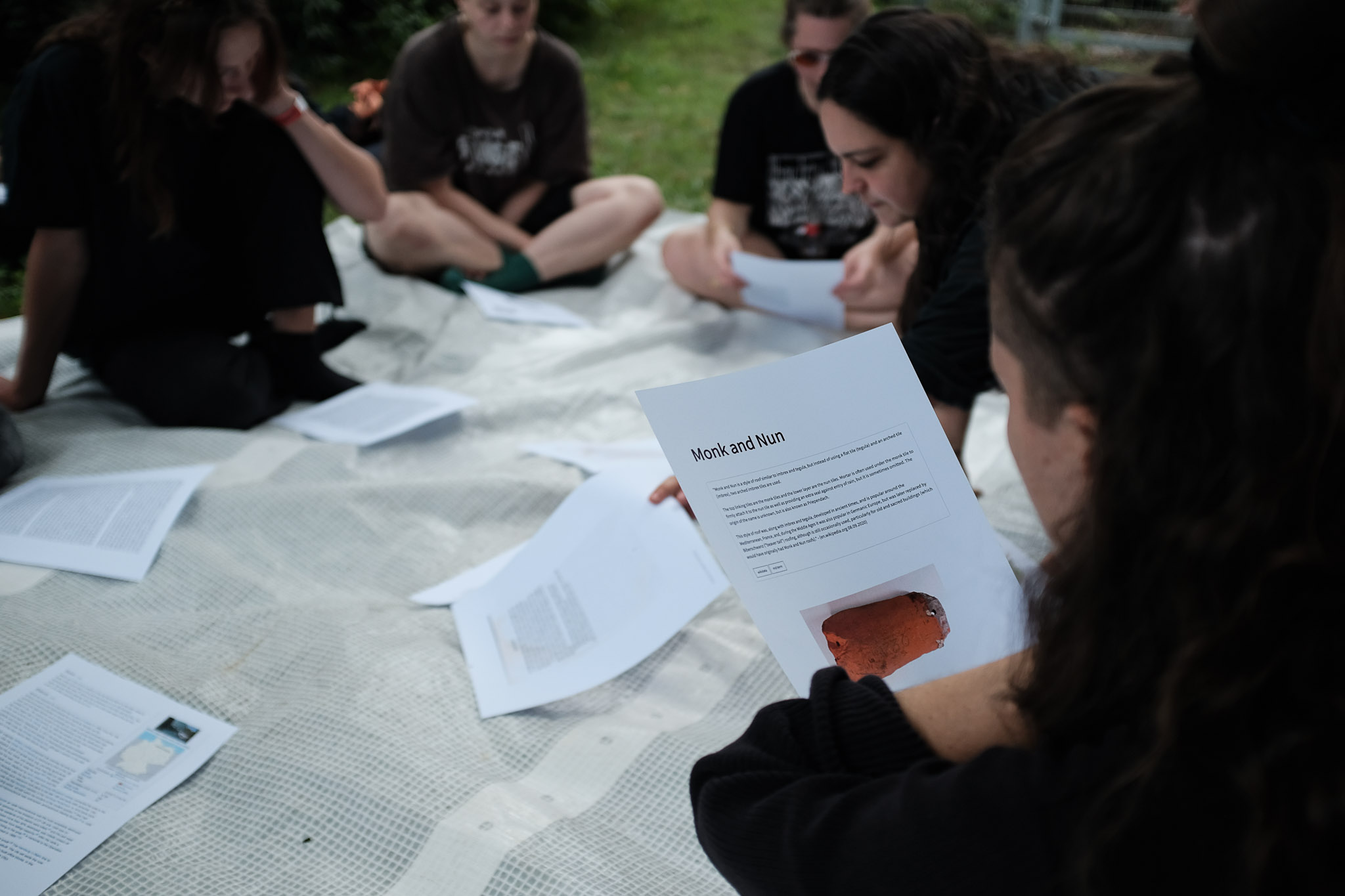
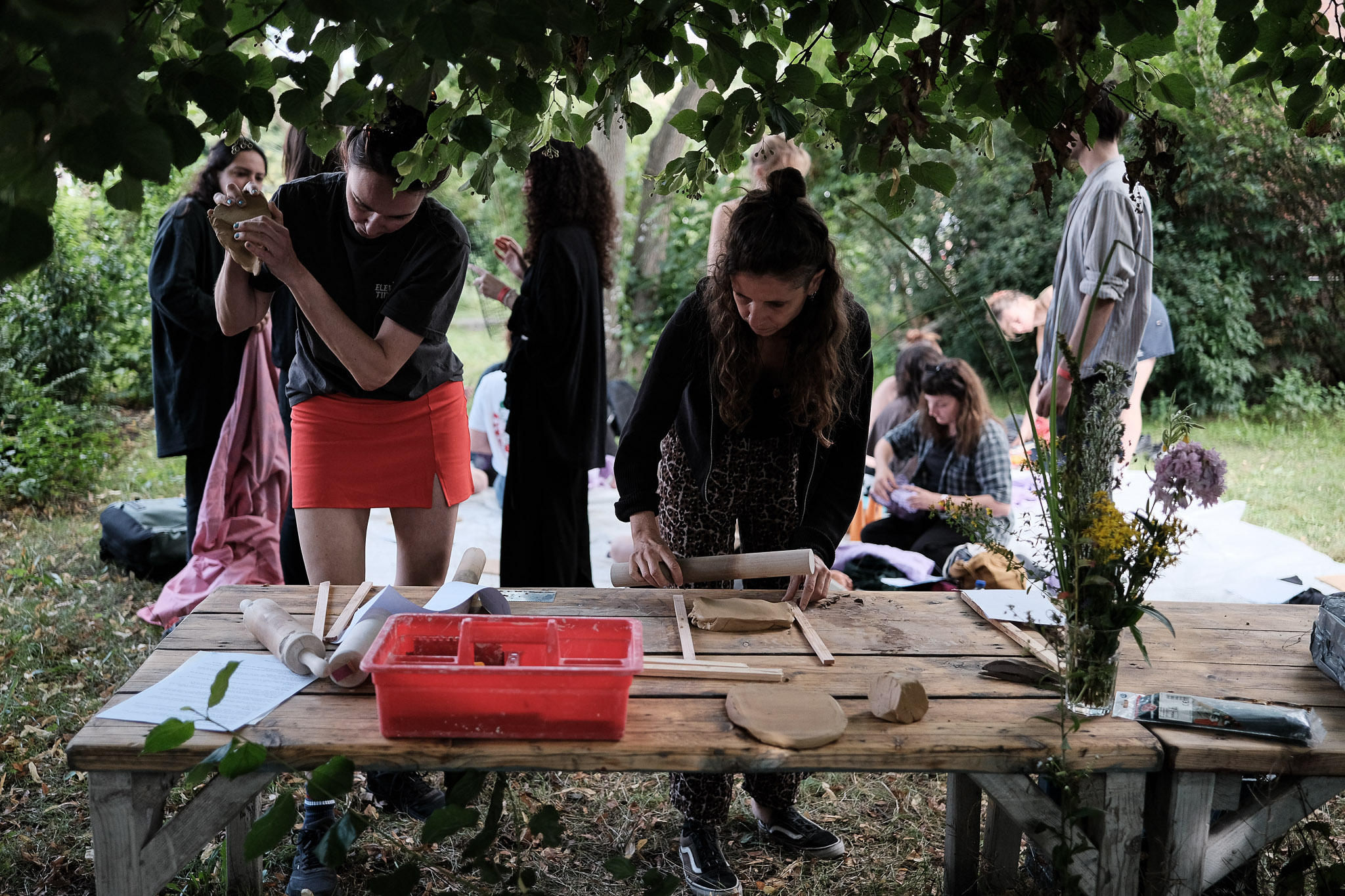
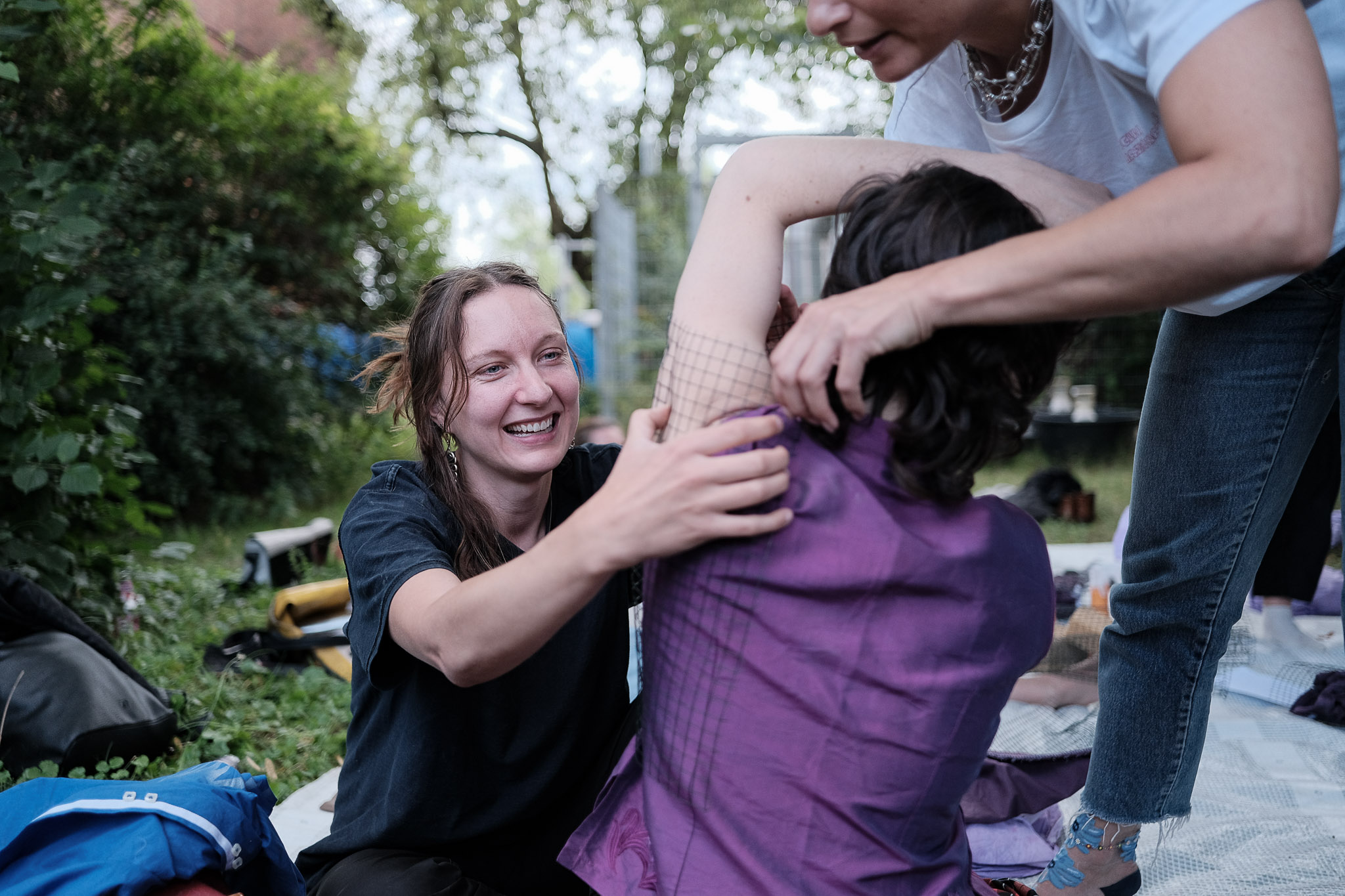
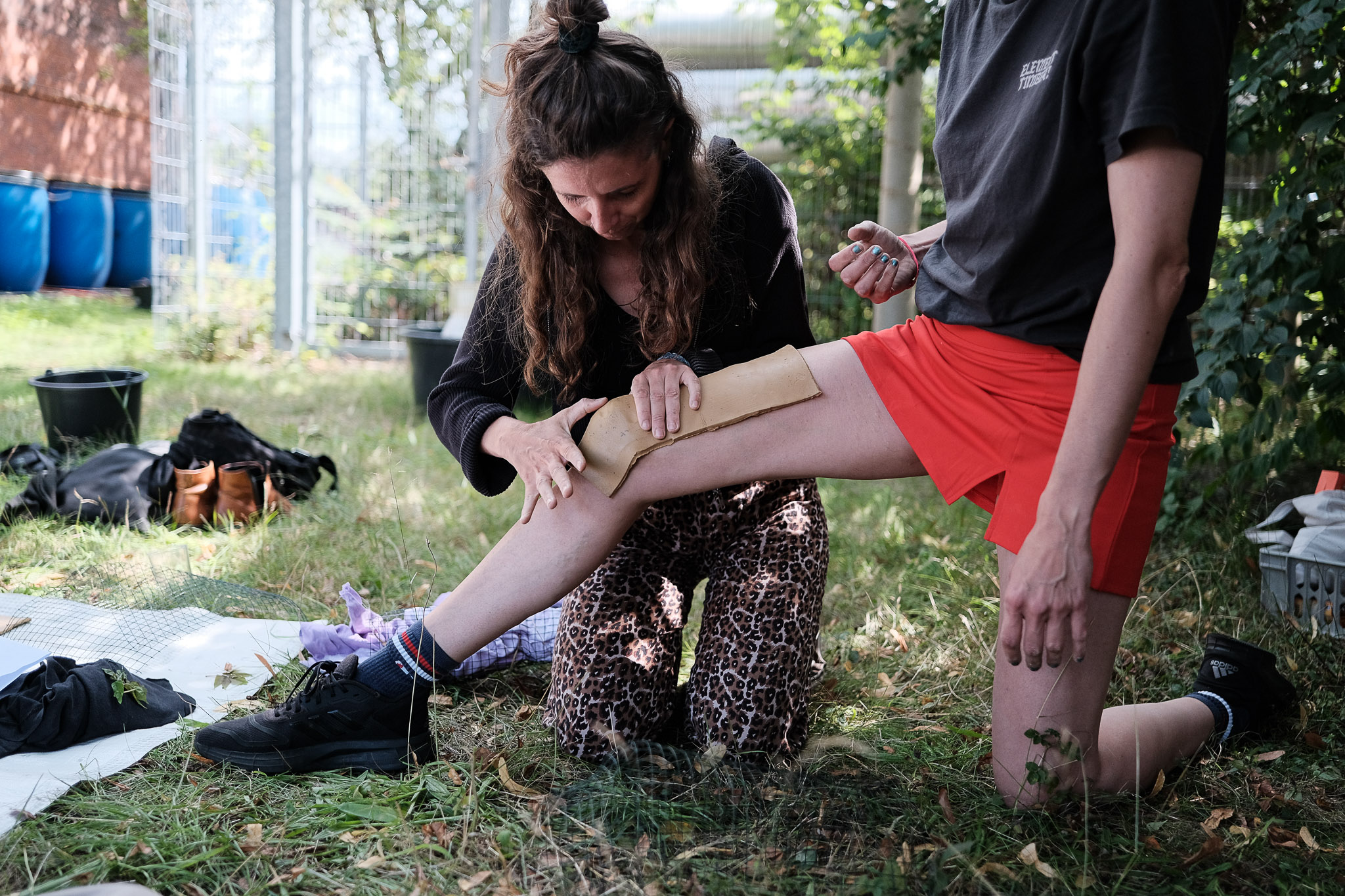
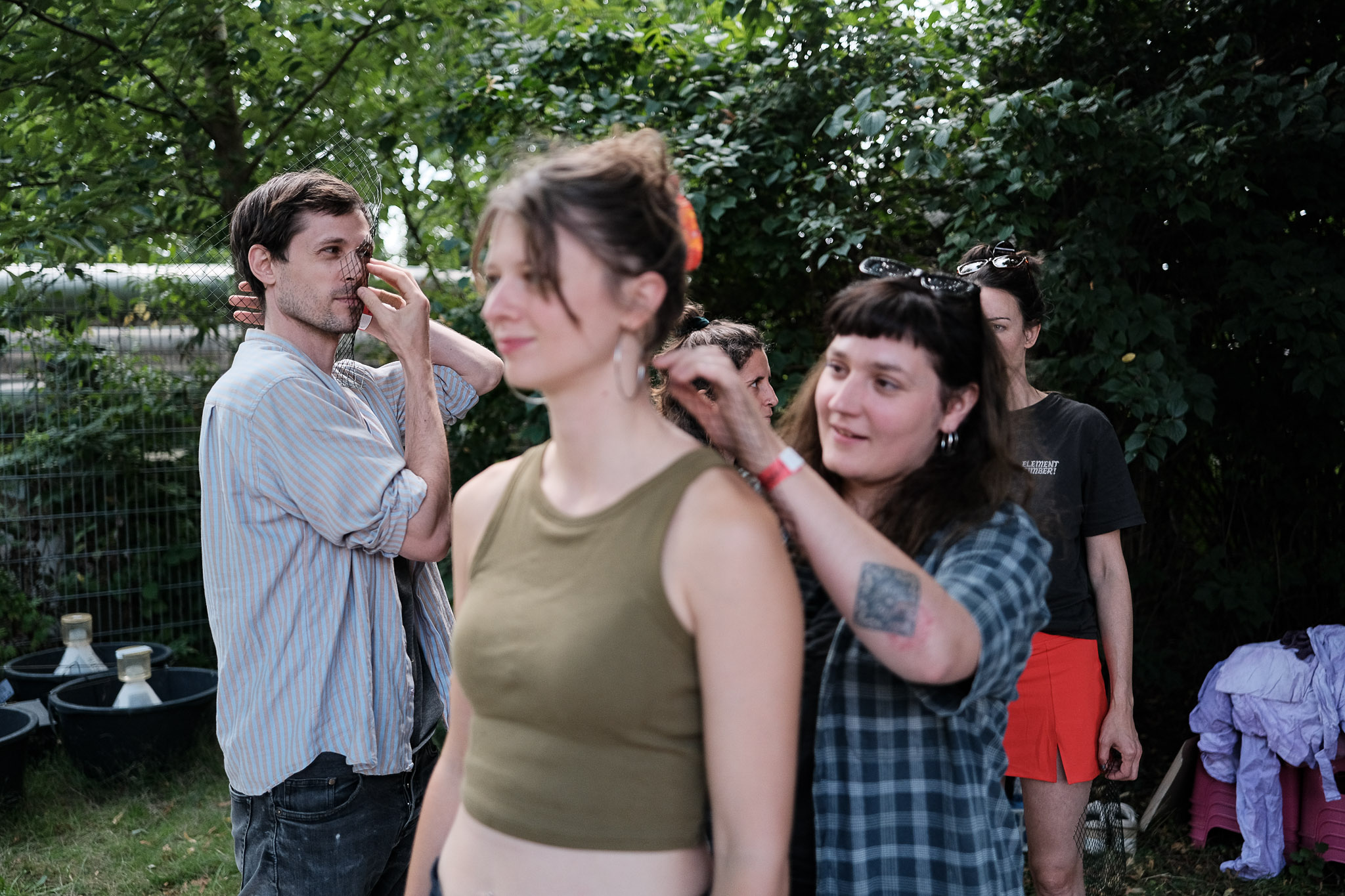
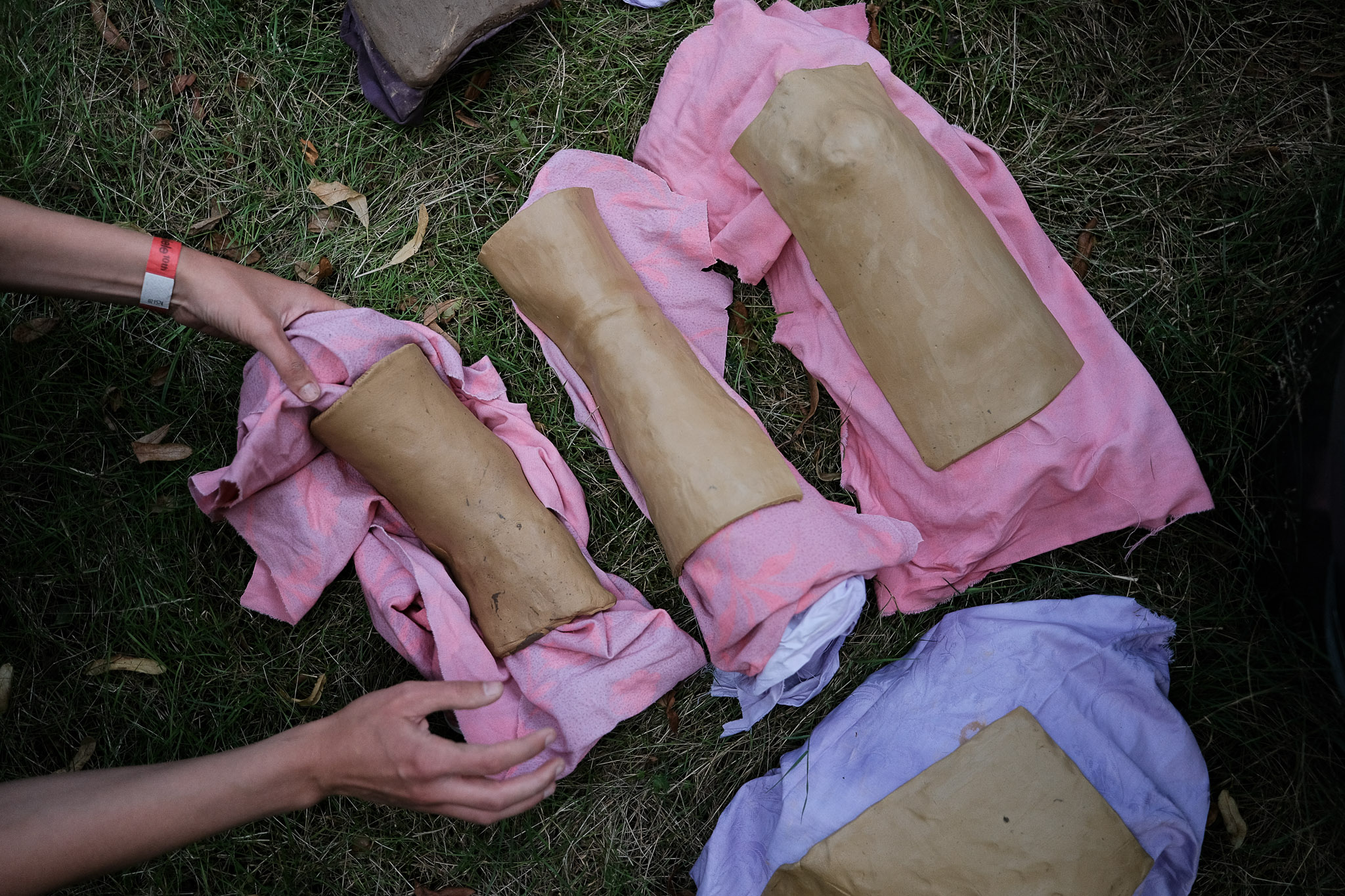
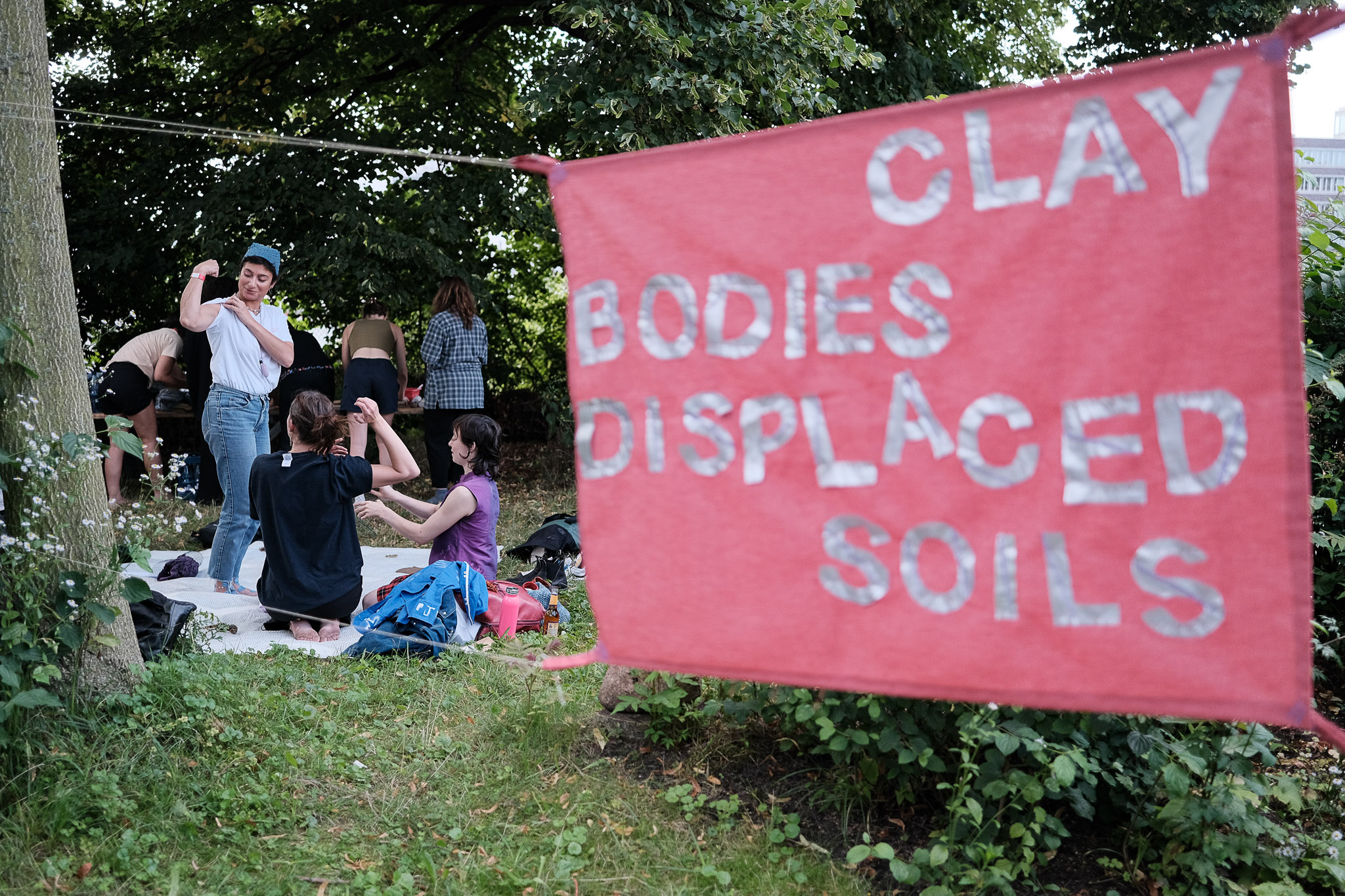
Durante un taller colectivo, les participantes moldearon piezas de arcilla utilizando sus piernas, caderas, hombros y espaldas como superficies de conformado. El proceso retoma la técnica Mönche und Nonne (monje y monja), utilizada históricamente en Hamburgo para fabricar tejas moldeando la arcilla sobre el muslo. El cuerpo funciona aquí como molde, medida y herramienta: una materia producida para ser uniforme adquiere diferencias a través del contacto con cuerpos concretos.
La teja prolonga este recorrido material y espacial. La arcilla procede del suelo y, una vez extraída, moldeada y cocida, asciende hasta la cubierta. Allí se convierte en una superficie que conduce el agua y protege de la lluvia, una función que resuena, sin pretender restituirlo, con el antiguo humedal sobre el que se encuentra PARKS.
Hamburg, Germany | 2025
Hallo: Festspiele 2025, PARKS.
Photos by Ali Haji.
clay bodies, displaced soils begins with the material history of PARKS and the transformations to its ground. The site is located on a former wetland and opposite the Müllverbrennungsanlage Bullerdeich, the first waste incineration plant to operate in Germany and continental Europe. Residues and particles released during incineration fell and accumulated on the surrounding ground; some of the waste generated through this process also re-entered circulation as construction material and was used, among other things, to produce mortar for buildings in the area.
The project tends to these relationships between ground, waste and architecture: how matter is extracted, displaced, burned, deposited and reincorporated into the built environment. What seems to disappear reappears in another form, and what comes from the ground can eventually become part of a wall, a joint or a roof.
Unable to work directly with the soil at PARKS, we used commercial clay: earth from elsewhere, separated from its geological context and transformed through extraction, refinement and distribution into a standardised material able to circulate. The project works from this distance: from the impossibility of accessing the ground beneath our feet, and from the presence of another earth that has arrived there through industrial and commercial networks.
During a collective workshop, participants moulded pieces of clay using their legs, hips, shoulders and backs as forming surfaces. The process draws on the Mönche und Nonne (monk and nun) technique, historically used in Hamburg to make roof tiles by shaping clay over the thigh. Here, the body acts as mould, measure and tool: a material produced to be uniform takes on differences through contact with specific bodies.
The roof tile continues this movement from ground to architecture. Clay comes from the ground and, once extracted, shaped and fired, rises to the roof. There, it becomes a surface that channels water and protects against rain, a function that resonates, without attempting to restore it, with the former wetland on which PARKS stands.
Photos by Ali Haji.
clay bodies, displaced soils begins with the material history of PARKS and the transformations to its ground. The site is located on a former wetland and opposite the Müllverbrennungsanlage Bullerdeich, the first waste incineration plant to operate in Germany and continental Europe. Residues and particles released during incineration fell and accumulated on the surrounding ground; some of the waste generated through this process also re-entered circulation as construction material and was used, among other things, to produce mortar for buildings in the area.
The project tends to these relationships between ground, waste and architecture: how matter is extracted, displaced, burned, deposited and reincorporated into the built environment. What seems to disappear reappears in another form, and what comes from the ground can eventually become part of a wall, a joint or a roof.
Unable to work directly with the soil at PARKS, we used commercial clay: earth from elsewhere, separated from its geological context and transformed through extraction, refinement and distribution into a standardised material able to circulate. The project works from this distance: from the impossibility of accessing the ground beneath our feet, and from the presence of another earth that has arrived there through industrial and commercial networks.
During a collective workshop, participants moulded pieces of clay using their legs, hips, shoulders and backs as forming surfaces. The process draws on the Mönche und Nonne (monk and nun) technique, historically used in Hamburg to make roof tiles by shaping clay over the thigh. Here, the body acts as mould, measure and tool: a material produced to be uniform takes on differences through contact with specific bodies.
The roof tile continues this movement from ground to architecture. Clay comes from the ground and, once extracted, shaped and fired, rises to the roof. There, it becomes a surface that channels water and protects against rain, a function that resonates, without attempting to restore it, with the former wetland on which PARKS stands.